A single project manager
One person owns your project from kickoff through final delivery. Direct line, replyable email, no ticket queues.

Museums, galleries, libraries, archives, and foundations bring us collections-level projects: managed end-to-end, billed on milestones, conservation-grade throughout. Whether it's 200 paintings or 100,000 negatives, we scope the right pipeline and deliver to your standards.
What you get
Institutional projects don't run on self-serve forms and ticket queues. They run on people who know your collection, your constraints, and your deadlines — and own the project from start to finish.
One person owns your project from kickoff through final delivery. Direct line, replyable email, no ticket queues.
Cotton gloves, dust-controlled prep, anti-static surfaces, filtered air. Chain-of-custody documentation by request.
FADGI, Metamorfoze, ISO 19264 — we calibrate the pipeline to whatever your collection policy or grant requires. Discussed during scoping.
Dublin Core, Spectrum, EAD, MODS, or your CMS's specific export shape. Data delivered ready to ingest.
Net-30 or net-60 terms available; payments tied to delivery milestones, not arbitrary calendar dates.
Bring the work to our Denver studio, or we set up at your facility for sensitive originals that shouldn't travel.
How a project runs
The shape varies — a 200-piece painting collection isn't a 30,000-negative archive — but the structure stays the same.
01
A scoping call to understand what you have, what you need, and what success looks like. Format types, sensitivity, deadlines, standards alignment.
02
A small batch first — typically 10–30 representative pieces — captured to your standards, calibrated, reviewed together. Fixes are cheap here, expensive later.
03
Full project, scheduled in batches with defined milestones. Status updates at each milestone; samples reviewable along the way.
04
Masters in your specified format, metadata in your CMS's shape, originals returned with chain-of-custody documentation if requested.
The pipeline
The phrase gets used loosely. We mean it specifically — equipment, calibration, and verification you can hand to your conservator without a footnote.
151-megapixel medium-format digital backs. Reflective and transmissive workflows. Color depth that stands up to a museum's spectrophotometer.
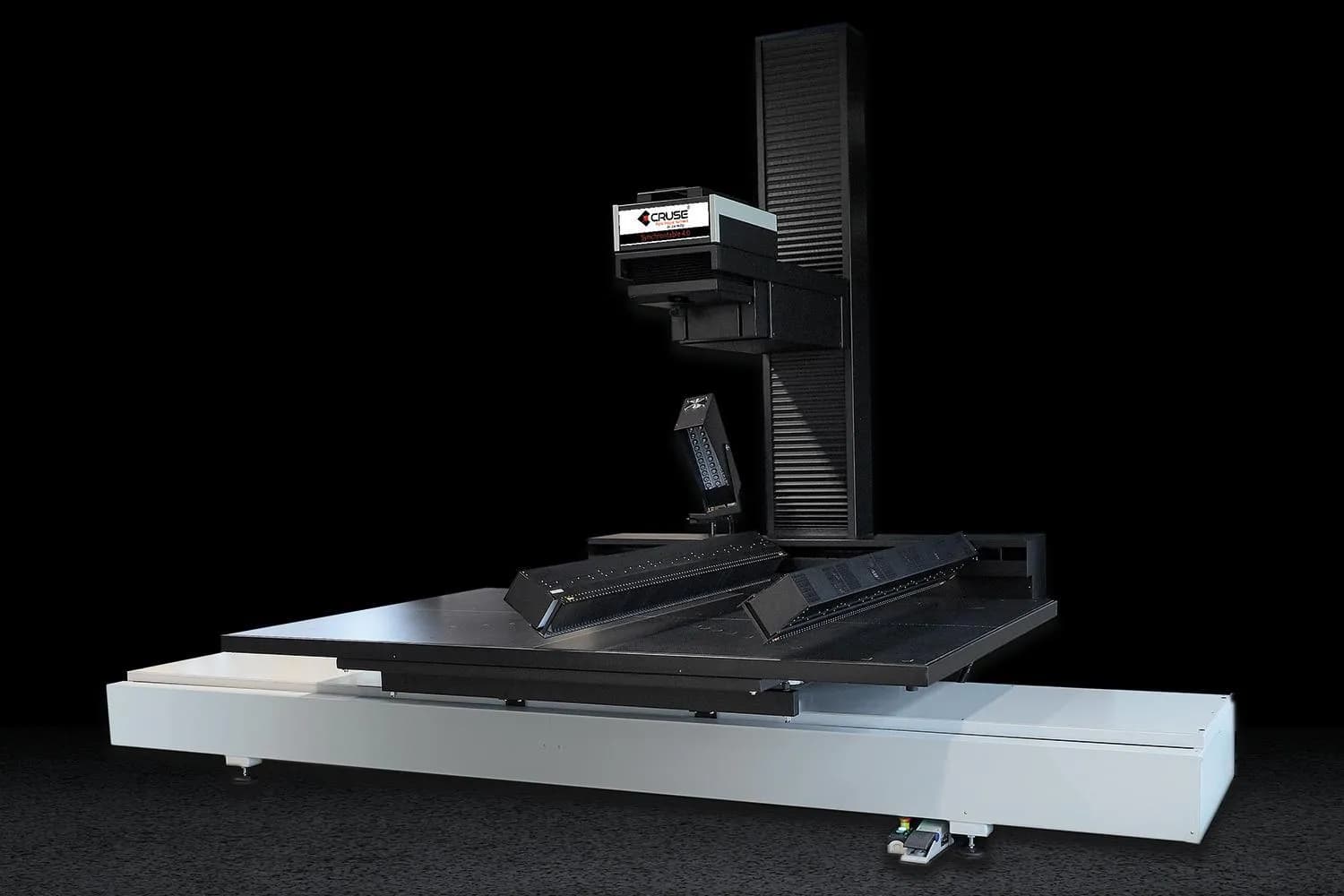
For paintings, large flats, and texture-rich originals — the Cruse pipeline captures even, glare-free illumination across the surface, no seams or stitching.
Each capture session is profiled against a museum-class target. Final delivery includes the verification report so your registrar has the receipts.
We'll get back within one business day to set up a scoping conversation — no commitment, no quote-mill template.
Looking for individual film scanning, fine-art reproduction, or insurance documentation? Start here →
Camera shop, photo club, or affiliate? See our partner programs →